
OP ED: The Internet is Critical to Asian Women's Careers and Survival by Marily Mondejar, Founder & CEO of Filipina Women's Network
Is the Internet slowing down for all of us?
Eight months ago, the Federal Communications Commission (FCC) began an unprecedented effort to regulate the Internet with telephone rules from the 1930s. Since then, the private investment needed to create better Internet service has declined noticeably. During the first half of 2015, Internet investment dropped 8%, according to figures released by major Internet providers. Excluding wireless providers, the fall was even greater – down 12%.
The Internet is Critical to Asian Women's Careers and Survival
by Marily Mondejar, CEO & Founder of The Filipina Women's Network
Is the Internet slowing down for all of us?
Eight months ago, the Federal Communications Commission (FCC) began an unprecedented effort to regulate the Internet with telephone rules from the 1930s. Since then, the private investment needed to create better Internet service has declined noticeably. During the first half of 2015, Internet investment dropped 8%, according to figures released by major Internet providers. Excluding wireless providers, the fall was even greater – down 12%.
The results:
1) Families especially women who rely on the Internet and their smartphones for their daily routine tasks are disadvantaged and losing opportunities for faster high-speed Internet service.
2) The smartphone is a key lifeline for women and girls in abusive situations. Poor Internet service denies these women access to language services, help hotlines, shelters and law enforcement support severely impacting the domestic violence and human trafficking problems.
3) Barrier to entry of young Asian women to STEM careers. This is much more than just an academic dispute. The consequences are significant. , as a 2013 Nielsen study put it, “Asian Americans are digital pioneers, adopting technology faster than any other segment.” How can women compete in the workplace?
Equally important, the report explained, “With higher rates of smartphone usage, online video consumption, and internet connectivity, [Asian Americans] are redefining the way they watch, listen, and interact.”
High-speed Internet access has been crucial to our community’s many successes. However, we must not ignore the work that still needs to be done. Our community encompasses over 50 ethnic groups and over 100 languages. While aggregated data sets reflect heavy-use of these technologies, disaggregated data reveal much lower socioeconomic and attainment figures for subpopulations in the Asian American community. Because of the immense diversity within the population, Asian Americans more than most ethnic communities rely on in-language and culturally relevant media and services.
This is a critical time as we hope to lessen the burden on Asian American consumers and their families and create more opportunities for women in the tech space.
Unfortunately, this progress was threatened by a FCC decision last February. By a narrow vote, the Commission approved using rules written 80 years ago to regulate today’s emerging technologies. These rules (sometimes called “Title II” because that’s the section of the 1934 federal law in which they appear) have been outdated for decades. Applying rules designed for the telegraph onto cutting-edge broadband networks will only serve to slow innovation.
To make matters worse, The Los Angeles Times has noted that these new Title II rules could soon make our monthly Internet bills “more complicated — and potentially more expensive.”
Beyond higher costs, the fact that Title II rules have resulted in a drop in investment means that tech jobs are at risk. This should be particularly alarming as we are continuing to search for ways to increase the representation of women, particularly Asian American women, in the tech industry.
By adopting Title II rules to regulate the Internet, the FCC turned its back on decades of successful Federal efforts that encouraged Internet growth. The Commission should recognize this error and go back to the policies that will initiate growth for Asian American women and families who are continuing to adopt wireless technologies and fight for roles within the tech industry.
Title II's Negative Effects on Minority Populations and Small Businesses
Recent Pew research shows that Asian Americans are enthusiastic users of the Internet and rely on broadband more so than other groups. When it comes to broadband adoption, 97 percent of English-speaking Asian Americans use the Internet compared to 78 percent of blacks, 81 percent of Hispanics, and 85 percent of Whites. Embracing policies like Title II will only lead to the deterioration of a resource that has become indispensable to so many people.
The Internet is an essential tool especially for those who live in remote areas where educational and professional opportunities may not be as widely available as in other parts of the country. Broadband is an important resource for people in rural areas to excel through online education and career development programs. When overbearing regulations threaten access to Internet innovations, those who rely on that access the most also stand to lose the most.
News story from AsianJournal
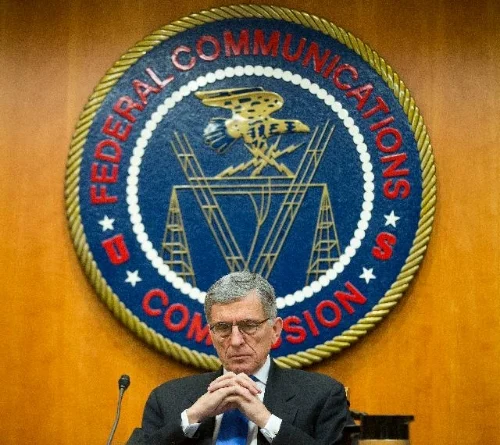
Federal Communication Commission (FCC) Chairman Tom Wheeler(AP Photo/Pablo Martinez Monsivais). Image credit: Forbes.com
Earlier this year, the Federal Communications Commission (FCC) voted along party lines to reclassify Internet Service Providers (ISPs) as public utilities and to regulate the Internet under outdated Title II regulations. The negative effects of these burdensome regulations are quickly materializing. There are now clear indications that Title II harms broadband investment and innovation, which in turn harms many diverse communities and small businesses across the country.
Typically, these companies spend billions every year to expand and enhance network infrastructure, in order to meet consumer demand, deliver new innovations, and remain competitive. Those billions constitute economic growth, and they create jobs and bring important benefits to consumers and businesses. This decline means that both those who depend on the Internet the most and those who struggle to get access will be negatively affected as broadband providers and tech companies continue to react to heavy regulation.
Recent Pew research shows that Asian Americans are enthusiastic users of the Internet and rely on broadband more so than other groups. When it comes to broadband adoption, 97 percent of English-speaking Asian Americans use the Internet compared to 78 percent of blacks, 81 percent of Hispanics, and 85 percent of Whites. Embracing policies like Title II will only lead to the deterioration of a resource that has become indispensable to so many people.
The Internet is an essential tool especially for those who live in remote areas where educational and professional opportunities may not be as widely available as in other parts of the country. Broadband is an important resource for people in rural areas to excel through online education and career development programs. When overbearing regulations threaten access to Internet innovations, those who rely on that access the most also stand to lose the most.
Read more here.
News story from The Asian Journal.