
U.S. FWN100™ '09 and Chairwoman of the New York City Commission on Human Rights Weighs in On Her Leadership Style
Chairwoman and Commissioner of the New York City Commission on Human Rights Carmelyn Malalis (U.S. FWN100™ '09) weighs in on her leadership style, the virtue of multi-tasking and being comfortable in her own skin as a queer woman of color in this interview with Adam Bryant for Corner Office, a weekly New York Times column on leadership.
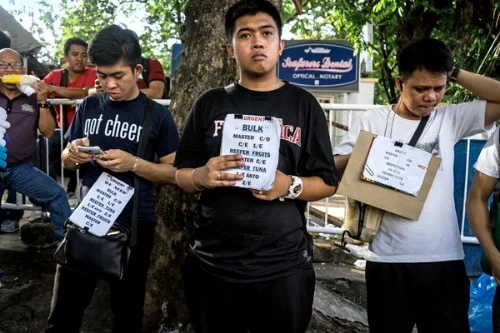
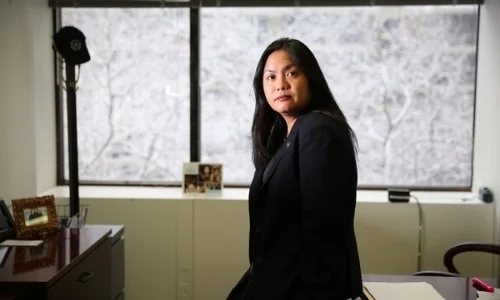
Photo credit: New York Times.
This interview with Carmelyn P. Malalis, chairwoman and commissioner of the New York City Commission on Human Rights and U.S. FWN100™ '09 was conducted and condensed by Adam Bryant for Corner Office, New York Times.
Q. Were you in leadership positions when you were younger?
A. From a very early age, I was in leadership roles, whether it was choir president in grade school or student council president in high school. My parents are immigrants from the Philippines, and even though they were proud of me, I think they were wary of the independence that was awakening in me. Having their daughter expressing her opinions so publicly and openly was just not something that culturally they were accustomed to.
A few years ago, I received an award, and my parents joined me at the luncheon. My parents and I have the type of relationship and experience that I know a lot of my friends who are also second-generation have with their parents. We’re out in the world doing things that are very different from their lives. Often the result is that our parents know very little about what we feel very strongly about.
Then there are these moments when it becomes very real for your parents. I vividly remember after the event, we went to get our coats, and my dad said to me: “You know, Carm, when you were young, you were very opinionated, and it was really tough on me and Mom. But I can see it’s done well for you.” I think about that all the time.
Do you see strands of your parents in your leadership style today?
To the extent that real multitasking exists — because I’m aware of all of the studies saying there’s no such thing as multitasking — I definitely got that from my mother. I grew up thinking she could do everything.
And my core belief of wanting to reach out to more marginalized populations and working with vulnerable groups comes from my father, certainly. I remember he would occasionally make trips on his own to the Philippines to visit a sick relative. He would leave with a full suitcase of clothing, and he would come back with really just the clothing on his back. And my mom would say, “What happened?” His answer was always, “Somebody needed it more than me.”
Did you have a clear idea in college what you wanted to do for a career?
My mom was a doctor, and I started out college thinking I was going to be a doctor too. By the end of my first year in college, I like to say that I joined the support group for other Asian-American non-pre-med students. I veered toward doing a lot more of the small seminar classes that were very much about empowerment, disempowerment, relationships of different communities. That started me thinking that I wanted to do something in law or politics.
Watch the Video Interview.
News story courtesy of the New York Times.
Tricked and Indebted on Land, Abused or Abandoned at Sea unveils abuse of Filipino seafarers
When Eril Andrade left this small village, he was healthy and hoping to earn enough on a fishing boat on the high seas to replace his mother’s leaky roof.
Seven months later, his body was sent home in a wooden coffin: jet black from having been kept in a fish freezer aboard a ship for more than a month, missing an eye and his pancreas, and covered in cuts and bruises, which an autopsy report later concluded had been inflicted before death.
Story from Ian Urbina, New York Times.
Men on Kalaw Avenue in Manila advertised seafaring jobs in September.
Photo credit: Hannah Reyes for The New York Times.
By Ian Urbina, New York Times
When Eril Andrade left this small village, he was healthy and hoping to earn enough on a fishing boat on the high seas to replace his mother’s leaky roof.
Seven months later, his body was sent home in a wooden coffin: jet black from having been kept in a fish freezer aboard a ship for more than a month, missing an eye and his pancreas, and covered in cuts and bruises, which an autopsy report later concluded had been inflicted before death.
“Sick and resting,” said a note taped to his body. Handwritten in Chinese by the ship’s captain, it stated only that Mr. Andrade, 31, had fallen ill in his sleep.
Mr. Andrade, who died in February 2011, and nearly a dozen other men in his village had been recruited by an illegal “manning agency,” tricked with false promises of double the actual wages and then sent to an apartment in Singapore, where they were locked up for weeks, according to interviews and affidavits taken by local prosecutors. While they waited to be deployed to Taiwanese tuna ships, several said, a gatekeeper demanded sex from them for assignments at sea.
Once aboard, the men endured 20-hour workdays and brutal beatings, only to return home unpaid and deeply in debt from thousands of dollars in upfront costs, prosecutors say.
Thousands of maritime employment agencies around the world provide a vital service, supplying crew members for ships, from small trawlers to giant container carriers, and handling everything from paychecks to plane tickets. While many companies operate responsibly, over all the industry, which has drawn little attention, is poorly regulated. The few rules on the books do not even apply to fishing ships, where the worst abuses tend to happen, and enforcement is lax.
Illegal agencies operate with even greater impunity, sending men to ships notorious for poor safety and labor records; instructing them to travel on tourist or transit visas, which exempt them from the protections of many labor and anti-trafficking laws; and disavowing them if they are denied pay, injured, killed, abandoned or arrested at sea.
“It’s lies and cheating on land, then beatings and death at sea, then shame and debt when these men get home,” said Shelley Thio, a board member of Transient Workers Count Too, a migrant workers’ advocacy group in Singapore. “And the manning agencies are what make it all possible.”
Read the full story here.
Story from Ian Urbina, New York Times.
Carmelyn P. Malalis, U.S. FWN100™ '09, Vows To Revitalize NYC's Human Rights Agency
Appointed by New York City Mayor Bill de Blasio, Carmelyn is committed to cleaning up the Commission on Human Rights and to paying attention to the needs of the citizens of New York. Way to go, Carmelyn!
Carmelyn P. Malalis is the newly appointed leader of the Commission on Human Rights. Photo credit: Chang W. Lee/The New York Times.
So proud of Carmelyn P. Malalis, US FWN100™ '09! Appointed by New York City Mayor Bill de Blasio, she's committed to clean up the Commission on Human Rights and paying attention to the needs of the citizens of New York. Way to go, Carmelyn!
Read full article here - click here.
Every year, thousands of New Yorkers turn to the Commission on Human Rights, the city agency responsible for battling discrimination in the workplace, the housing market and beyond.
They describe sexual harassment and racial discrimination on the job, public buildings that remain inaccessible to disabled people, and landlords who refuse to rent to people who receive public assistance.
Then they wait. And wait. And wait.
“I get that folks want to see results,” Ms. Malalis, a 40-year-old lawyer who specializes in workplace discrimination cases, said in an interview. “I know that we’re going to do some great work here.”